
How Chemicals Affect Fertility: Toxins & Reproductive Health
Last updated on September 25th, 2026 at 03:43 pm
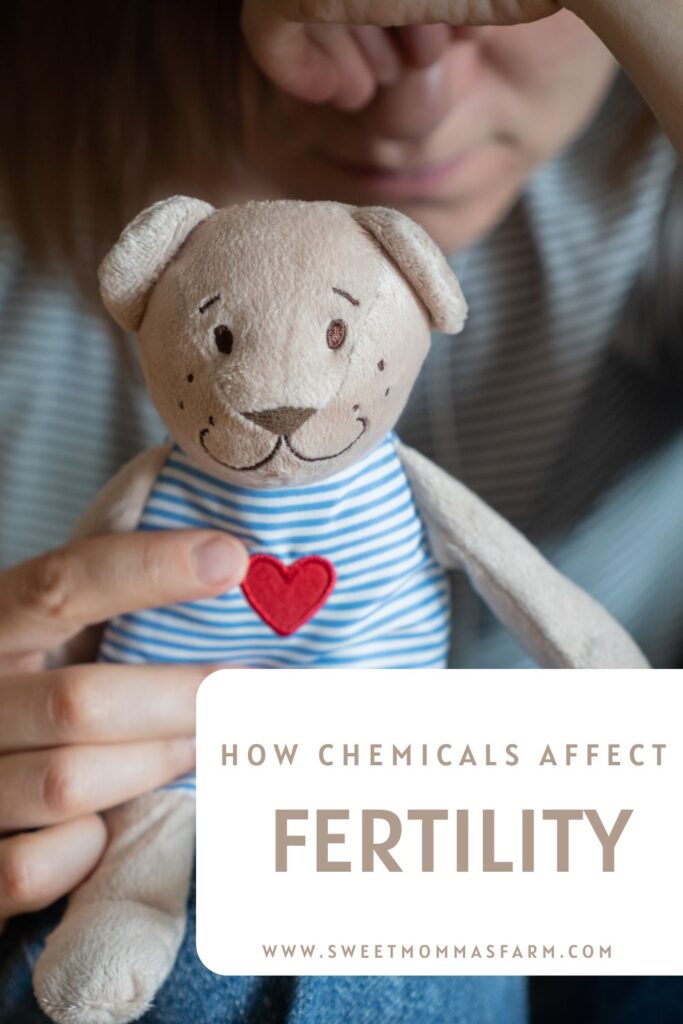
Infertility is one of the most difficult trials I have ever experienced—a mix of heartbreak, frustration, and the feeling that you’re all alone in your struggle.
It’s a path many of us walk in silence, with a longing that’s hard for others to fully grasp.
The dream of holding your child in your arms, feeling the joy of completing your family—it’s something I longed for so many times.
Over the past eight years, there have been countless tears, prayers, and questions to God. But through it all, we’ve learned so much. One of the biggest things I have learned is how chemicals affect fertility.
Please read our disclaimer and Terms & Conditions

Disclaimer:
I am not a licensed medical professional, and the information shared on this blog is for entertainment purposes only. Always consult with a qualified healthcare provider before making any changes to your diet, exercise routine, or using herbal remedies. The content on this blog reflects my personal research and experiences and not intended to diagnose, treat, cure, or prevent any disease.
Hope
I want to start off with hope, because honestly, over the last eight years it seemed hopeless more then hopeful.
You wonder to yourself when will the tears stop? When will it be my turn?
I want to say today that you will get your chance! The last four years has taught me not to give up and that God has a plan. A plan to bless us more than we could ever imagine.
So please hold on to hope! Hold fast to Christ! He has not abandoned you! He loves you! Be patience and you will see God’s hand in your life.
The Growing Problem of Infertility
Did you know that in the 1980s, only about 1.8% of people struggled with infertility?
By the end of the 1990s, that number had jumped to 26%.
Today, 1 in 6 people face infertility challenges. That’s a massive increase, and personally I think it has to do with the chemicals in our everyday products.(source)
The Impact of Chemicals on Fertility
Unfortunately, chemicals are everywhere—from personal care items to food packaging.
One of the biggest problems with chemicals is many products contain forms of estrogen or even block progesterone. Both estrogen and progesterone are crucial for both men and women.
Men
In men, estrogen regulates libido, erectile function, and sperm quality.
Too much estrogen, it can mess with all of these, along with cholesterol levels, cardiovascular health, and skin issues.
Estrogen also stimulates serotonin and beta-endorphins—known as the “feel-good” neurotransmitters.
Progesterone helps create testosterone and regulates mood and sperm production. Without adequate progesterone in either gender, pregnancy isn’t possible.
Women
Estrogen affect women in the same way, though minus the erectile function and sperm quality.
Estrogen helps regulate mood and thickness of the uterine lining.
However, too much estrogen can cause an overproduction of this lining, making it difficult for the body to shed it properly. This can lead to hormonal imbalances, as well as conditions like fibroids, endometriosis, PCOS, painful periods, thyroid issues and even cancers such as breast and uterine cancer.
Progesterone is just as important, for women’s health. Progesterone prepares the womb for a baby. Without it, conception is nearly impossible.
It’s also vital for a baby’s development during the early stages of pregnancy (1st trimester).
So, let’s talk about the chemicals and even herbs you should be aware of.
(sources 15, 16, 17, 18, 19, 20)

Chemicals to Avoid (and Why)
While this list isn’t a full list of everything, my rule of thumb is, if you can’t pronounce an ingredient, it’s best to avoid it. There is no need to wonder what an ingredient is when it’s 15 letters long and looks like and equation.
Here are some key chemicals that my family and I avoid:
- Bisphenol A (BPA): Found in plastic containers, food packaging, receipts, and even electronics, BPA mimics estrogen. Remember to much estrogen wrecks the bodies hormone balance.
- Triclosan: Common in antibacterial soaps and hand sanitizers, triclosan interferes with hormone regulation and is found in cleaning products and personal care items. Try to go with vinegar cleaners.
- Perfluorinated Chemicals (PFCs): These are used in stain-resistant fabrics, non-stick cookware, and water-repellent items. They’ve been linked to infertility and developmental issues in babies. Remember Teflon? If not just think if you don’t have to use tallow or coconut oil on a pan to make sure it doesn’t stick, it’s not natural.
- Volatile Organic Compounds (VOCs): You see this and think organic! How could it be bad? Don’t always trust this word. These are chemicals like formaldehyde and benzene found in paints, cleaning products, and air fresheners that can cause hormonal imbalances and other health problems.
- Nonylphenol Ethoxylates (NPEs): Often found in laundry detergents, paints, and cosmetics, NPEs mimic estrogen. More estrogen bad, not good.
- Parabens: These preservatives are found in many cosmetics, shampoos, lotions, and even food packaging. Parabens are linked to hormone disruption.
- Phthalates: Found in plastics, cosmetics, and even food packaging, phthalates can also affect hormonal health and fertility.
Herbs and Natural Ingredients: Use With Caution
Estrogen (Phytoestrogen)
Now, here’s where my opinion might not be the most popular: not all herbs and natural ingredients are created equal.
I’m not saying God messed up. I am saying we did!
Let me explain.
There are two different types of estrogen that are made outside the body. One is Xenoestrogens, which are made by the chemicals above. Phytoestrogens which is made in over 300 herbs and mimic estrogen in the body.
While estrogen is essential for fertility, once again, too much of it can cause problems.
Are you tired of me saying that, yet?
Some of the most common herbs with phytoestrogen include:
- Lavender
- Tea tree
- Aloe vera
- Chamomile
- Cinnamon
- Calendula
- Shea butter
- Cocoa butter
- Soy
Now, before you get mad at me, I believe these herbs are wonderful in moderation, but using them every day can increase your risk of developing hormone-related issues.
For instance, lavender and tea tree oil have been known to disrupt hormonal balance, causing boys to grow breasts, and cause girls to go through early puberty, especially when used regularly on the skin.
This is not a once in awhile use, this is everyday or weekly use.
Progesterone Blockers Phytoestrogen
Now we learned about phytoestrogen lets talk about herbs that our progesterone blockers. Progesterone, a crucial hormone for pregnancy and ovulation. It helps sustain your baby for the first trimester and allows your uterus to be able to support a baby. Let’s take a closer look at some herbs that can impact progesterone levels.
Herbs That Can Block Progesterone
- Aloe Vera
- Peppermint
- Pennyroyal
Does this mean we should avoid herbs altogether?
Absolutely not!
Herbs can be incredibly beneficial when used properly.
Some are safe to use every day, while others are best reserved for occasional use.
Keep in mind, we’re all unique, and certain herbs might have a greater positive impact on some people’s health and fertility than others. What works well for one person might not affect another in the same way.
However, a word of caution: there are certain herbs that can be harmful to anyone—whether you’re pregnant, breastfeeding, or simply trying to stay healthy. That’s why it’s so important to be mindful of what you’re using. Before adding any herbs to your routine, especially if you’re on medication, it’s always a good idea to consult with a knowledgeable herbalist or healthcare provider.
Don’t Panic – There Are Ways to Protect Yourself
I know this information might feel overwhelming; believe me, I’ve been there.
I frantically and still at times start throwing out all the plastic items in our house. We use bamboo toothbrushes now.
I really want to throw away all our clothes and only wear cotton and linen, but my budget is not on the same page.
It honestly, feels like we are being conspired against, but that’s the conspiracy theoriest in me.
But don’t panic.
The good news is you can start making better choices with the right knowledge.
There are companies offering cleaner, safer alternatives. One of our favorite’s (alert shameful advertising) Sweet Momma’s Farm, skincare and shampoo bar products. But truly they are all we use.
Another great place to shop is Thrive Market—though I’m not an affiliate, I genuinely love their products.
However, even though it says its good, please still read the labels. Companies want money and they are good at what they do.
Start small—maybe swap your toothpaste or laundry detergent. There are so many simple swaps you can make right now! If you’re interested in creating your own cleaning supplies, check out my other post on natural cleaning products.
The Absorption Factor: What You Put on Your Skin Matters
Here’s an important point: our skin absorbs what we put on it and plus it is the largest organ our body has.
Think about how muscle creams or herbal oils work—they get absorbed into the body. The skin doesn’t filter everything, and where we have more hair follicles, absorption happens more quickly. So, whatever you put on your skin can end up in your bloodstream or other parts of your body.
You might be thinking, “But don’t our liver and kidneys filter out the bad stuff?”
Yes—they do. God designed our bodies with incredible systems to help process and remove many substances we come into contact with.
But imagine a bucket with a filter at the bottom. As you pour clean water through it, the water flows freely. Now start adding handfuls of dirt. At first, the filter still works, but over time the dirt begins to clog it. The more dirt you add, the harder it becomes for the water to pass through.
Our bodies can be similar. Every day we’re exposed to chemicals from many different sources—not just personal care products, but also our food, water, air, and environment. While our bodies work hard to process and eliminate these substances, there comes a point where they can become overwhelmed. Some compounds may be stored in body tissues rather than immediately eliminated.
That’s one of the reasons I choose products made with simple, natural ingredients. I know I can’t control everything I’m exposed to, but I can make small choices each day that help reduce my family’s overall chemical load. (sources: 21)
Take Control of Your Fertility Journey
I encourage you to take small, intentional steps towards better health.
Don’t just throw everything out! Your spouse will not like it or your budget.
Start by being aware of the ingredients in your personal care products and cleaning supplies. And replace them one by one.
It has been a long journey, but now after two years of removing chemicals and eating real food my body has changed.
My periods are lighter and free from pain. My moods are not up and down and I feel better then I have in a long time.
Also remember, this journey is personal, and what works for one person may not work for another. It may take longer for your body to heal then another persons.
But by learning more about the chemicals around us and making informed choices, we can take steps toward a healthier future—and maybe even a growing family.
This is not a quick fix, but a life decision to heal your body the way God intended it. Be patient and hold on to the hope of growing your family. We wish you all the best in the world, and we are here to listen to your journey. I hope you have a better understanding of how chemicals affect fertility.



This is such important information! I have been slowly cleaning up my personal care products over the last few years, and shampoo is the last one I’m settling in on. I wish more companies prioritized our health over profits :'(
I agree! I wish they would care more about their consumers.
What a beautiful and educational post ❤️ Thank you for sharing! This is a struggle soo many women deal with but think they are the only ones dealing with. I think you are soo brave to step forward not only with your story but also with possible explanations and possible solutions. You are a strong woman and a modern day pioneer!
Thank you! I just know how much heartache there is and I want to help people not have to experience it.
Thank you for sharing! I really appreciate this information. My husband and I are around 12 years into out infertility journey, praying for a miracle. We’ve eliminated so many toxins from our home and routine, it’s so important! Thank you!
I completely understand and we are doing the same thing. I will be having more posts on what foods to eat and what to stay away from next month. However, I highly recommend real food for fertility. It is an amazing book!
You gave so much information here! Thank you for this!
Thank you!
Thank you for this very informative and thorough article! Will share these to friends to go through infertility challenges!
Thank you! Yes, please share I’d love for more people to know about these things.
So informative! This information should be more mainstream!
What a precious post! As an OB nurse, I’ve seen so many health problems in women (including fertility issues) in recent years. It’s heartbreaking! It nice to feel like we have some control over our health by making some changes at home. Great info! Thank you!
This means a lot, thank you!