
A Gentle Guide to Threading, Marrying & Knotting Your Needle
Last updated on September 25th, 2026 at 03:48 pm
(With a Slow-Living, Homestead, Scandinavian Touch)
We hope this little sewing guide helps you learn everything you need to know about threading, marrying, and knotting your needle—skills that connect us to generations of makers before us.
Over the years on our homestead, I’ve grown to love the art of doing things slowly. There’s something sacred about settling into a quiet corner, gathering your fabric and thread, and letting your hands work at a gentle, steady pace. Hand sewing feels like a peaceful rhythm—almost like prayer—especially compared to the loud clatter of a machine.
Please read our Disclaimer and Terms & Conditions
Rediscovering the Beauty of Slow, Handcrafted Work
It wasn’t always this way.
Back in middle school home economics, I learned the basics of both hand and machine sewing. To be honest, I didn’t love it then. My apron fell apart within the week, and that pillowcase… well, we won’t talk about that. I left sewing behind for almost 15 years—until the desire to make a dress for my daughter pulled me back in.
Jumping into sewing again, starting with a dress, probably wasn’t my brightest idea. Most beginners start with something simple, but I’ve never been much for the easy path. Thankfully, the Lord placed some wonderful women in my life who encouraged me, guided me, and didn’t let me give up. With every frustration and seam ripper session, something new grew inside me—a love for the craft itself. I fell in love with the process, especially making dresses that felt soft, feminine, and handmade with intention.
Two years later and many dresses deeper, my grandmother introduced me to an older hand-stitching technique known as Promise Stitch. It has quietly grown in popularity over the last few decades, and the moment I learned it, I felt something settle deeply—like finding my way back home to the slow, steady ways of our Scandinavian ancestors who valued simple, practical, artful work done by hand.
That’s when I realized:
I didn’t need a sewing machine to create beautiful things.
Hand sewing was enough—peaceful, portable, traditional, grounding.
And friend, whether you’ve been sewing for years or you’re learning how to thread, knot, and marry your needle for the first time, I’m here to help. Your own sewing journey begins with something so simple—and so satisfying.
Why Hand Sew?
Hand sewing is more than a technique—it’s a mindset. Here’s why so many homesteaders, traditional makers, and slow-living families love it:
Cost-Effective
No machine needed. Just a needle, thread, scissors, and fabric.
Portable
A small sewing kit fits in a bag or pocket. I love to sew during road trips or while watching sheep graze in the pasture.
Traditional Skills
Hand stitches preserve techniques passed down through generations—much like the old Nordic ways of crafting with intention.
Dependable
No motors, no repairs, no broken machine needles.
Quiet & Mindful
Hand sewing invites stillness, patience, and fewer mistakes. It’s a gentle way to slow down, breathe deeply, and create something meaningful.
Threading the Needle
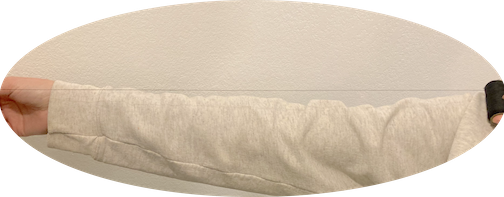
- Measure Your Thread
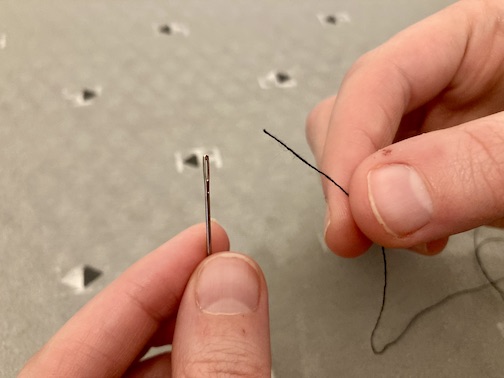
Pull out a piece of thread about the length of your arm. This helps prevent tangling. - Thread the Eye
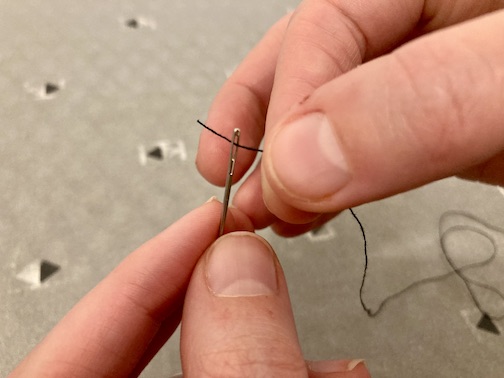
- Slip the thread through the needle’s eye.
- Cut the end cleanly and lightly wet it if needed.
- A needle threader works wonderfully for tiny needle eyes.
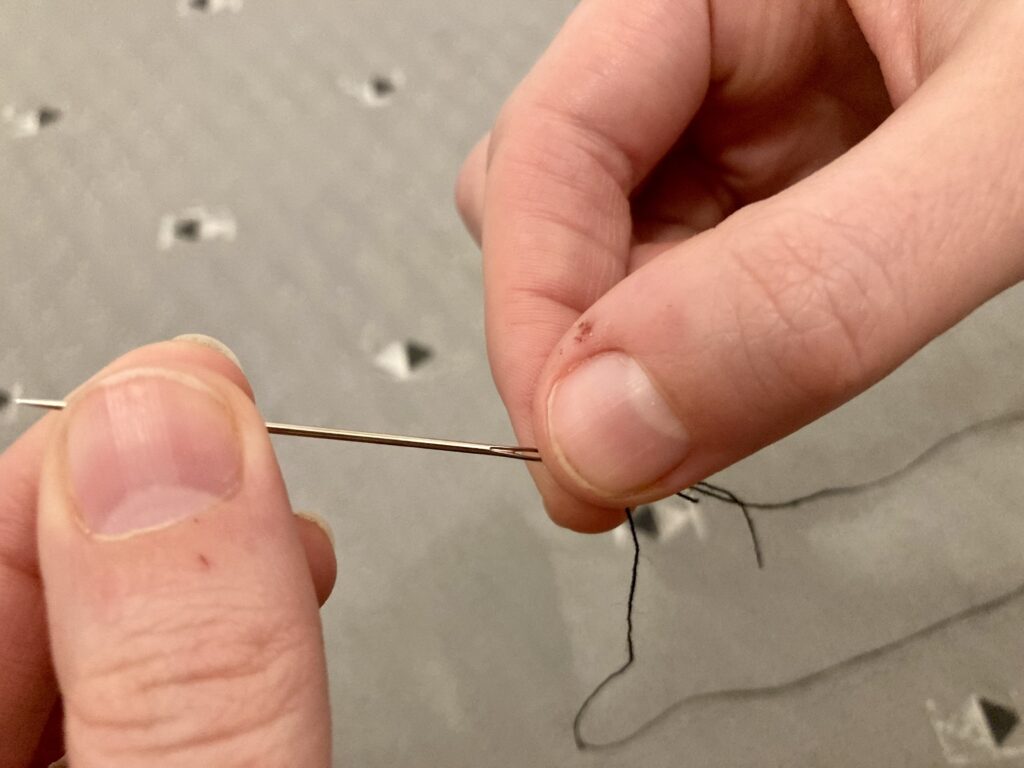
Marrying The Thread & Needle
This beautiful old term simply means binding your thread and needle together so they move as one.
- Hold the end of your threaded strand above the needle’s point.
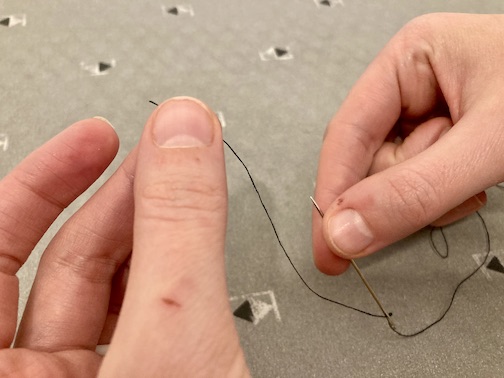
- Push the needlepoint gently between the thread fibers.
- Weave the needle through the thread two or three times.
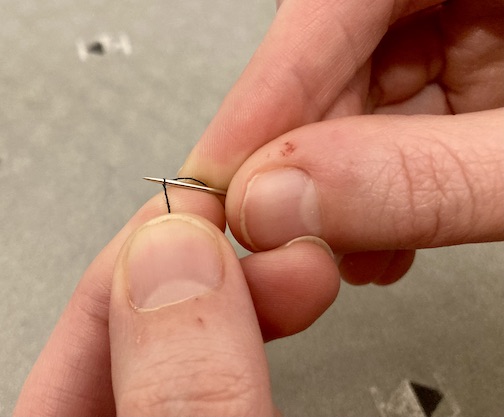
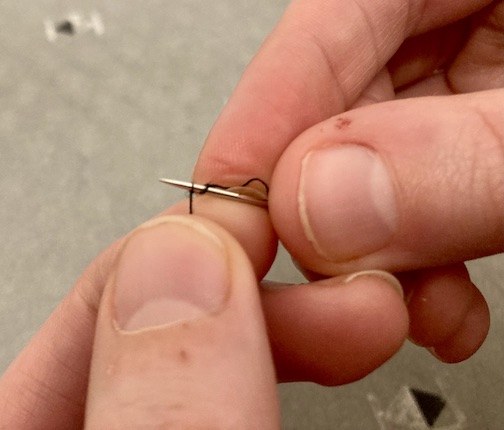
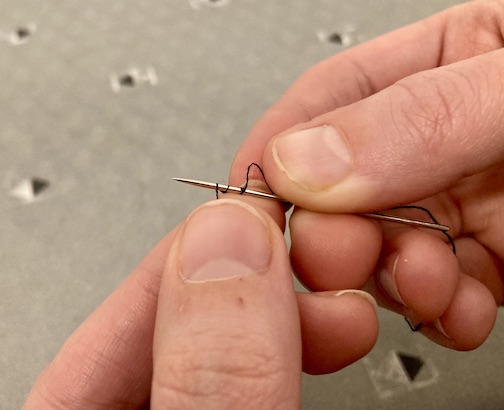
Slide the thread down through the eye and give a small tug.
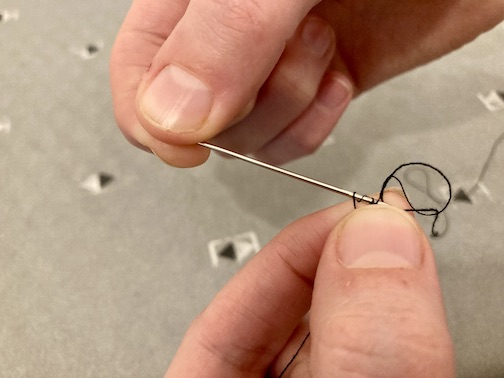
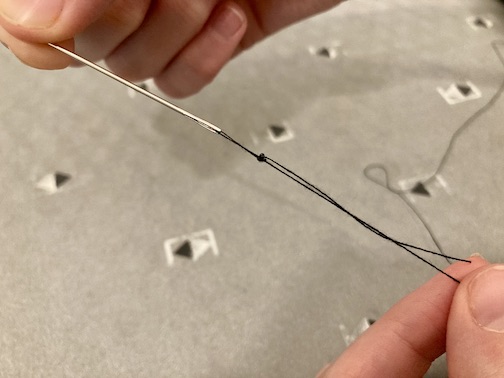
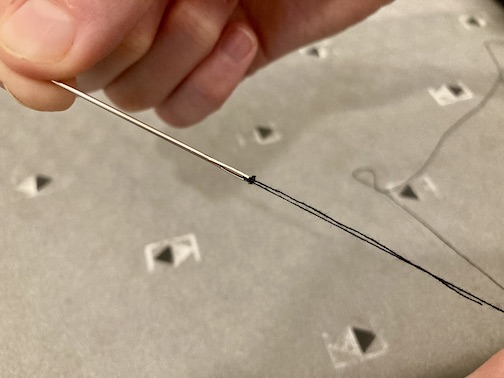
You’ve now married your needle—joining the two so they work together smoothly.
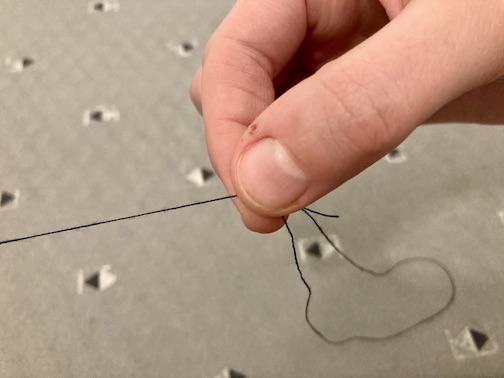
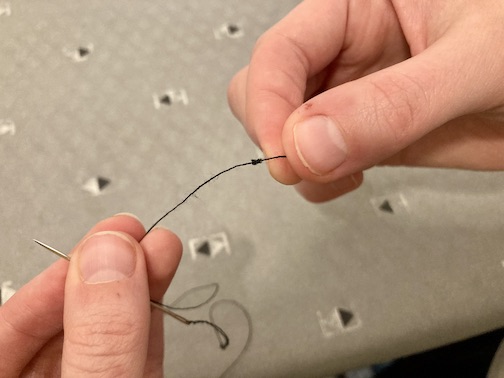
Knotting The End Of The Thread
- Hold the end of the thread.
- Wrap it around the needle two or three times.
- Pull the needle through while guiding the loops down the thread until they form a knot.
And just like that—you’ve made your knot!
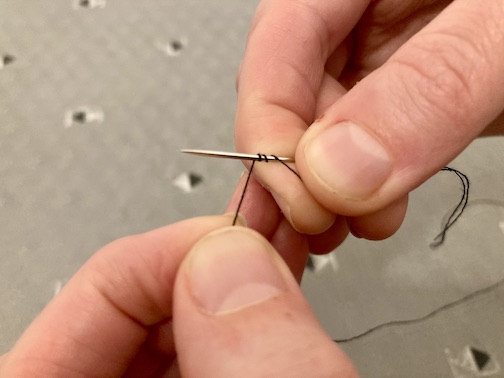
Congrats!
You’re now ready to begin your own hand-sewing journey—one that blends creativity, tradition, and a slower, more intentional pace of life.
Click here for basic stitches
Video tutorial coming soon!
How did it go? Have you hand-sewn anything before? I’d love to hear what you’re working on.
I love hand sewing! These tips are great thanks for sharing!
This is such a great guide! Loved the pics!😁
This is great! I teach hand sewing to students in my art classes. I’ve never heard of this technique, I’ll have to teach them now!